Until a few years ago, the direction of the orchestra wanted to make it the only art without a codified technique, very few things that could be stated in the time of a coffee at the bar. In reality, Ilya Musin has dedicated her entire life to teaching and a good part of it to codifying the technique; a continuous magisterium from 1927 (when he took over Nikolay Malko's class at the Leningrad Conservatory) to 1999 a few days before his death.
Laboriousness studded with an impressive pleiad of directors baked by his class, (Rudolf Barshai, Yuri Temirkanov, Semyon Bychkov, Valery Gergiev, Teodor Kurrentzis (just to name a few) and the publication in Russia of several books. Nobody has explored the field of teaching like him.
But be careful: let's not label it hastily as a 'Russian school'. Musin is Musin, the Russian school is another thing, after him this division into national schools no longer exists: there is only one language. My students from Australia to South Africa, from Japan to South America to Venezuela, use the same language that is understood in an absolutely obvious and natural way.
Musin, in fact, very soon realized that he was facing a language. He has long observed students, himself, directors from all over the world - the so-called 'directors of the past' who were contemporary, young and healthy at the time: Mitropoulos, Walter, Busch, Klemperer, Knappertsbusch ... He observed and related the phenomena and drew its conclusions by drafting the laws that govern them.
Musin extended and reformulated the concept of conducting technique
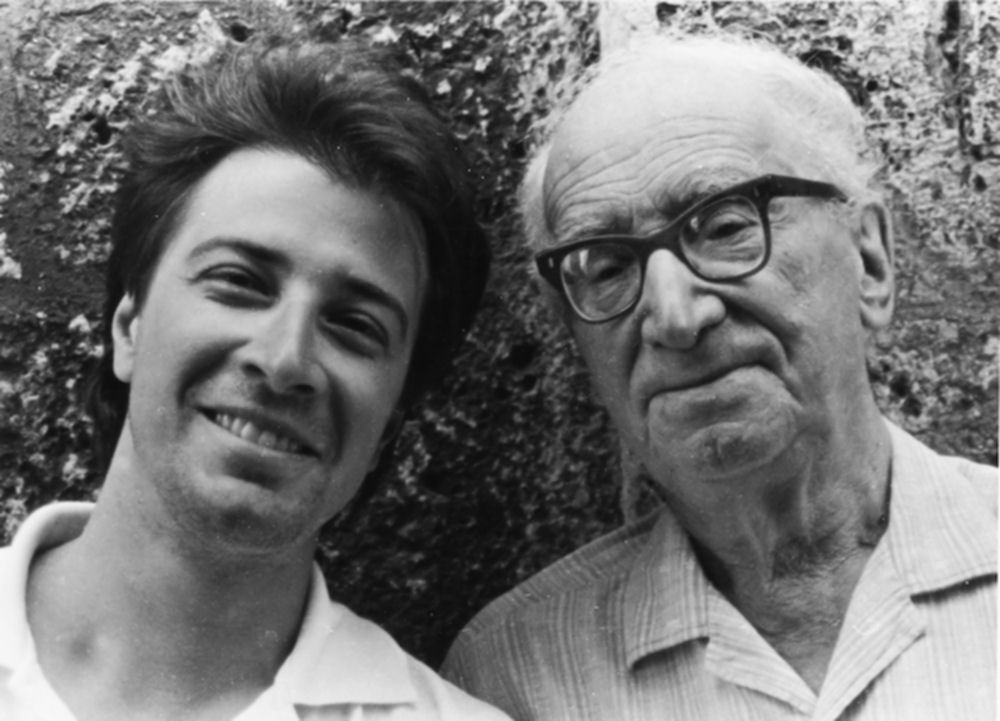 I often like to make the following comparison: Newton, starting from observation, has drawn up laws that govern the Universe; similarly Musin from a young age, guided by the light of innate talents, worked to raise the columns of a new matter: the technique of conducting. Unfortunately, in the east, the iron curtain digging deep divisions with our western reality has obscured its work to the rest of the world and even today its name remains unknown to most.
With the first book (Technica dirizhirovanja of 1967) Musin publishes the result of about 40 years of studies and observations, the first edition runs out in a few months and the second reprint in 1994 (5000 copies), it runs out within a week. In this book all aspects of gestural technique are addressed and analyzed, the subject is enriched with a new terminology:
restrained attack, subdivided attack, upward attack, prolonged attack, the phases of the attacks, a new classification of the crowns, weight of the sound, sound taking, breathing and start time, amplitude of the gesture and initial sonority, speed of the gesture and initial attack, internal attacks, detached gesture, tied gesture, compensation of the transient of attack ...
to name the first ones that come to me.
All aspects are analyzed, analyzed and drafted. Musin develops a system that allows the director - through the study, assimilation and application of observed and codified technical principles - to express himself and communicate his interpretation.
Very briefly, the Musin Method is a tool that gives directors the opportunity to express their interpretative thinking and make it visible.
After my return to Italy, driven by the desire to spread this new subject in the West, I proposed at first to translate Musin's book but I had to give up in the face of a major obstacle, the translation of pages and pages to describe the gestures. And even when I had never done it, I would have obtained what I wanted, that is, the certainty that a reader would have made an exact idea of gestures that must be carried out in a particular and specific way.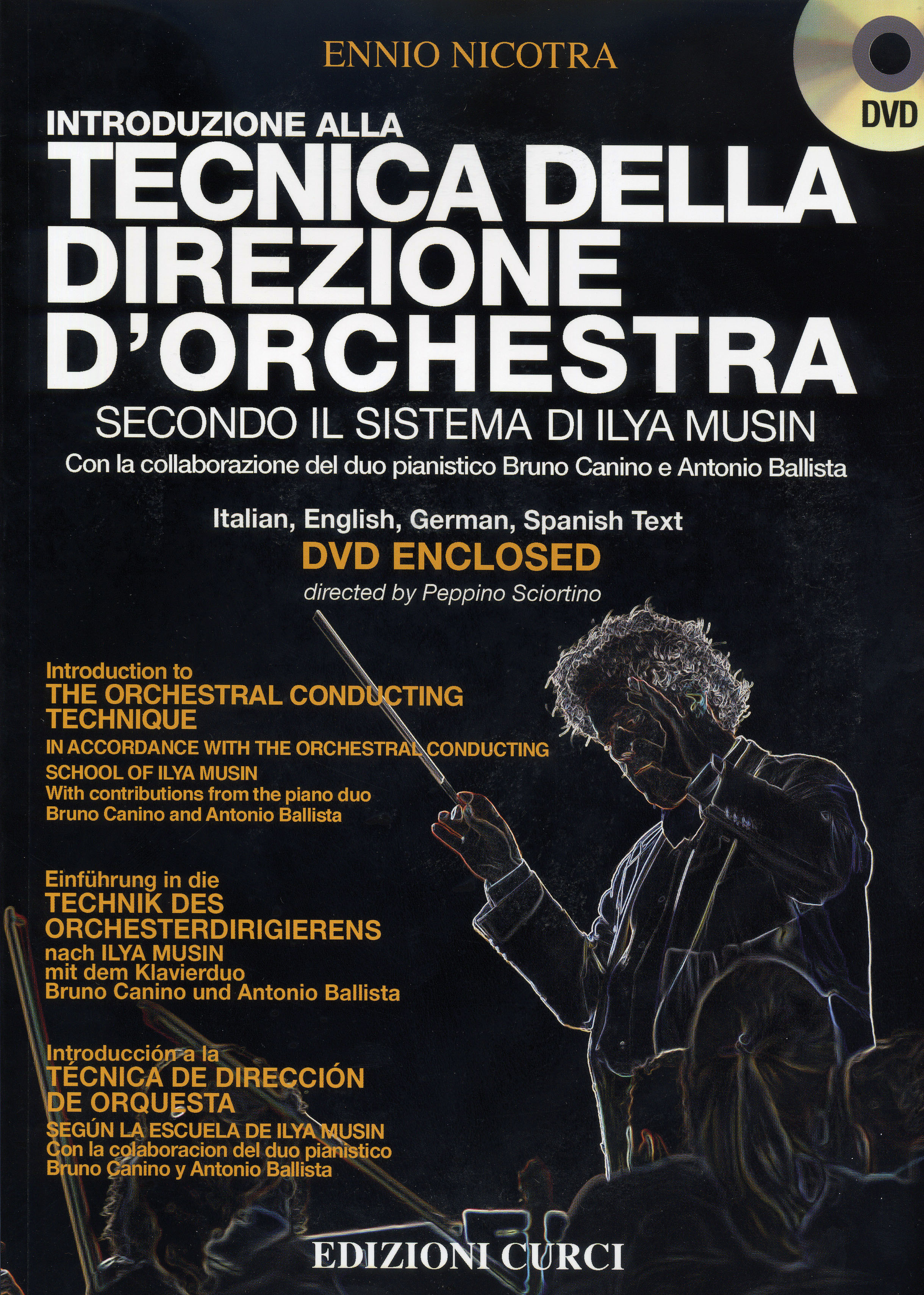 Let me explain: writing that the gesture of the staccato is built on a percussive movement of the wrist, nothing would have guaranteed me that the readers imagined exactly the gesture I meant and the way to achieve it.
To address this problem, I opted to attach an explanatory DVD of the illustrated gestures to the written text, in this way the reader would have had a clear guide and I would have avoided inevitable misunderstandings. In addition, the visual support allowed me to reduce the text to the essentials.
Today the book (Introduction to the Conducting Technique - Edizioni Curci Milano) has been translated into 4 languages and has reached its fourth reprint.
In it I expose the foundations of the Musin method, clearly no one will become an orchestra conductor after his reading, but he will be able to extrapolate the basics to start taking the first steps on his own.
I had students from distant countries who had so well assimilated the notions set out there that then working with them in achieving the subsequent objectives was easy and pleasant. The book contains the keys to access a language, a small smattering that however allows you to proceed in a certain direction for those who decide to go into this path. The conductors very often make mistakes while conducting, but very few manage to see and hear them, because they cannot - or do not know - connect gesture-reaction, (also because they have been deceived by the orchestra which often automatically 'corrects' ). In fact I must say that many directors do not realize the reaction they cause with their gestures; a few weeks ago one of my courses was attended by a student who was very musically gifted but without any technique, most of his orchestration consisted of correcting accidents he caused.
We need to understand how to get our message to the orchestras crystal clear ...
Conducting is not an inexplicable and mysterious art: the orchestra is made by men, they play what they see, that's all.